Perplexity Computer is Perplexity's agentic computing platform, and on August 25, 2026 it became something more interesting: a local one. Portable Computer, built with NVIDIA, runs the entire agent runtime on your own hardware. That's a direct play for the privacy-conscious user, and it comes with a hardware bill most people won't pay.
This breakdown covers what Perplexity Computer actually is, how the local version works, what it costs, where it's strong, where it falls short, and which alternatives are worth considering. It draws on Perplexity's launch post and the launch-day coverage from VentureBeat, Gizmodo, and MarkTechPost.
What Is Perplexity Computer?
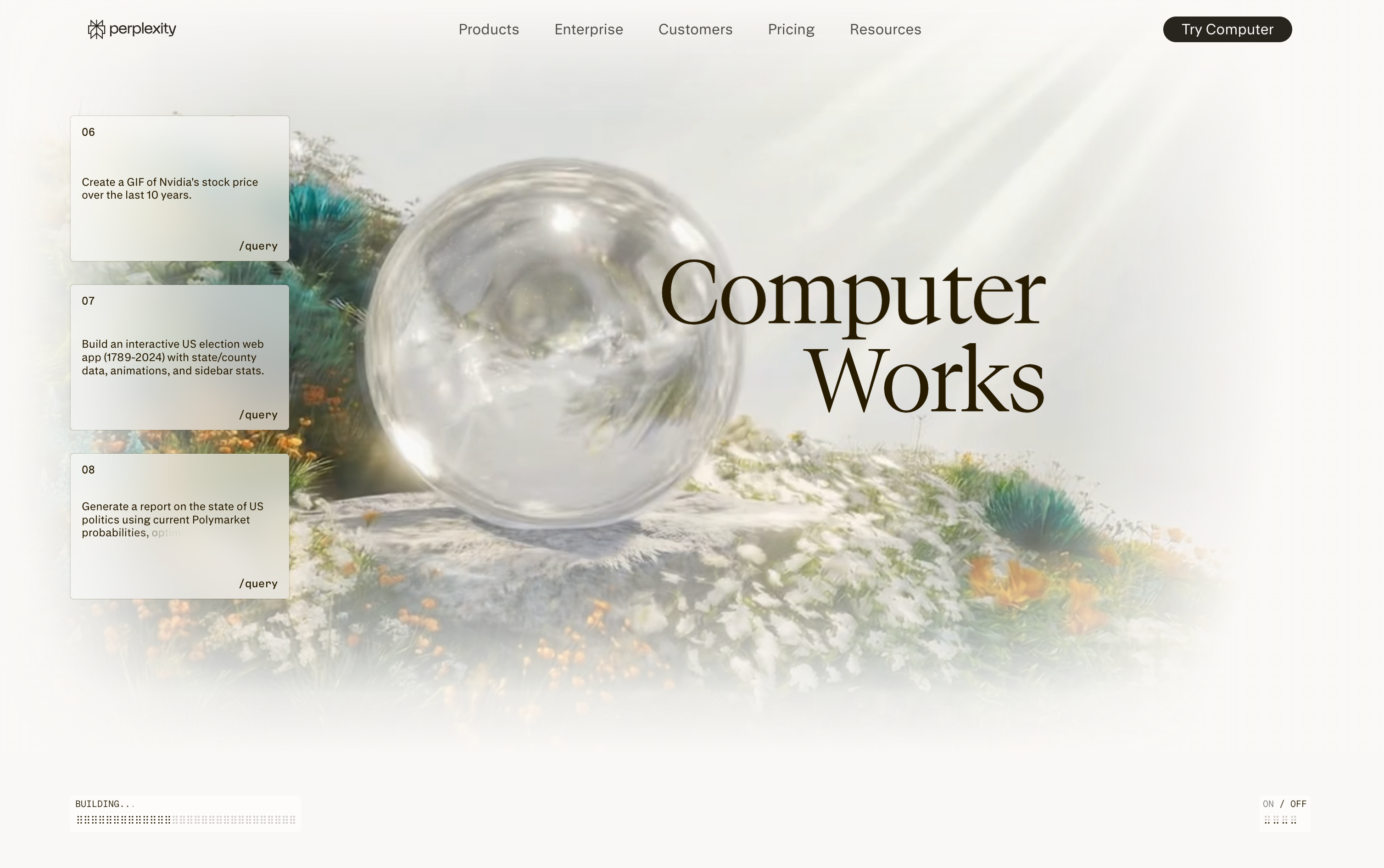
Perplexity Computer is the company's agentic platform: an orchestrated system that can draw on 19 different AI models to research, plan, and execute multi-step work, rather than answering one question at a time. It's the evolution of Perplexity from answer engine to agent.
Portable Computer, launched August 25, 2026 with NVIDIA, is the local version. The entire runtime, orchestrator model, subagent model, agent harness, tool sandbox, and app connectors, runs on hardware you own. Local steps carry zero token cost, and escalation to Perplexity's cloud models is opt-in and gated per step.
The positioning is explicit: Perplexity is pitching this at people whose most valuable work involves data they'd rather keep on their own machines. Private codebases, confidential financial documents, sensitive material. It's the strongest architectural privacy claim any major AI company has shipped, and the details decide how much of the claim survives contact with reality.
How Portable Computer Works
The hardware requirement is the headline. Portable Computer runs on an NVIDIA DGX Spark, a desktop AI computer built around the Grace Blackwell GB10 platform with a 20-core Arm CPU and 128 GB of unified memory, priced around $4,679. Alternatively, it runs on a Linux machine with an NVIDIA RTX GPU carrying at least 24 GB of VRAM.
A few things about this architecture matter:
- Everything starts on-device. The orchestrator, the subagents, the harness, and the sandbox all run locally. This is a full local agent stack, not a local model with a cloud brain.
- Two local models at launch. Qwen 3.8 27B, or PPLX 27B, Perplexity's post-trained version of the same model. NVIDIA's Nemotron 3.5 Lightning is announced as coming soon.
- Cloud escalation is user-gated. When a task exceeds local capability, the system asks before pinging the cloud. The escalation path runs a PII check first, blocks flagged content from upload, and sends text guidance rather than full documents.
- Linux only at launch. Windows is targeted for September. Apple silicon is not on the roadmap, which Gizmodo noted is a notable omission when a $900 Mac Mini has become the default hobbyist box for local agents.
- Self-reported benchmarks. On Perplexity's internal 53-task Local Knowledge Work Bench, Computer running Qwen 3.8 27B on a DGX Spark scored 82.6%, against 77.6% for the open-source Pi harness and 74.0% for Hermes running the identical model. Perplexity says it plans to open-source the bench, and it acknowledges compact models still trail the frontier on hard reasoning. Escalation, in the company's own words, "narrows but does not fully close the gap."
The launch demo told the intended story: a retail investor pointing the agent at a folder of 1099s and investment documents, the kind of material you'd hesitate to upload to a cloud service, and getting back a review flagging unnecessary fees. Sensitive files stay on the box. That's the thesis in one image.
Perplexity Computer Pricing and Access
How much does Perplexity Computer cost per month?
Portable Computer requires a Perplexity Pro or Max subscription on top of the hardware. The DGX Spark runs about $4,679 as a one-time purchase, and a Linux RTX build with 24 GB of VRAM isn't cheap either. The offset is that local steps carry zero token cost, so there's no per-use meter running once the machine is on your desk.
The cloud version of Perplexity Computer is included in the same Pro and Max subscriptions without the hardware requirement. Perplexity doesn't sell Portable Computer separately; it's a capability of the subscription, gated by the hardware.
The math is honest but narrow. If you already own the hardware, the subscription is the whole cost and local work is unmetered. If you don't, you're looking at a $4,000-plus entry fee before your first task runs.
Perplexity Computer Security and Privacy Controls
Is Perplexity Computer safe to use?
The local architecture is the security story, and it's a real one. Data processed by local models on your DGX Spark doesn't leave the machine. The escalation path, the part where privacy could leak, requires explicit per-step approval, runs a PII check before anything uploads, and transmits text guidance rather than your documents.
That's a genuinely well-designed trust boundary, and credit where due: most "private AI" claims dissolve into asterisks, and this one has an actual mechanism.
The caveats are about scope. The privacy guarantee covers tasks that stay local. The moment a task escalates, you're back in Perplexity's cloud with a frontier model, which is the right capability trade but ends the local data story for that step. Perplexity is also a proprietary, closed system. You're trusting their PII check, their sandbox, and their orchestrator without the ability to audit the code. And the company itself acknowledges that local 27B-class models trail the frontier, so the tasks you'd most want the cloud for are exactly the hardest, most sensitive ones.
What Perplexity Computer Does Well
- A real local trust boundary. Full local runtime, per-step escalation consent, PII screening before upload. This is the most serious local-privacy architecture a major AI company has shipped.
- Zero token costs locally. Once the hardware is paid for, local work is unmetered. For heavy agentic workloads, that math can win.
- Research pedigree. Perplexity's core strength is finding and synthesizing information, and Computer inherits it. Deep research with local execution is a strong combination.
- The DGX Spark form factor. A desk-sized box with 128 GB of unified memory is a real machine for local AI, and Portable Computer is the first polished consumer-facing reason to own one.
- Model roadmap. PPLX post-training plus Nemotron support coming suggests the local model quality will keep improving.
Where Perplexity Computer Falls Short
- The hardware gate. About $4,679 for a DGX Spark, or a Linux RTX rig. That's not a privacy feature; that's a privacy tax. The people who most need local AI aren't the people with a spare five grand.
- Linux only, no Apple silicon. No Mac support at launch, none on the roadmap, and Windows is a September target. The single most popular local-AI hobbyist platform is excluded.
- Pro or Max subscription required. The hardware doesn't buy you out of the subscription. You need both.
- It's a research agent, not a personal assistant. Computer is built around tasks and investigations. There's no persistent personal memory carrying your context across weeks, no messaging presence, no assistant that knows you.
- Closed source. The privacy architecture is promising, but you can't audit it. You're trusting the PII check because Perplexity says so.
- Local capability ceiling. Perplexity's own acknowledgement: compact models trail the frontier on hard reasoning, and escalation only narrows the gap. The tasks you most want help with are the ones most likely to phone home.
Key 2026 Trends in Personal AI Assistants
- Local AI went from hobby to product line. Perplexity's NVIDIA partnership is the clearest signal yet that major AI companies see on-device agentic computing as a market, with local models now strong enough to run real work [1].
- Agent capability is compounding. The Stanford AI Index 2026 recorded agent success rates on real-world terminal tasks jumping from 20% in 2025 to 77.3% [2], which is what makes a local-first agent plausible at all.
- Privacy became a launch feature. This summer's agent launches, from Instinct's access controversies to Portable Computer's local trust boundary, made data handling the central question rather than a footnote [3].
- Consumer adoption is arriving on schedule. An IEEE global study found 52% of technology leaders expect agentic AI to reach mass or near-mass consumer adoption as a personal assistant in 2026 [4].
Who Should Consider Perplexity Computer?
- The privacy-sensitive professional with budget: You handle confidential documents, you want local processing, and $4,679 for hardware plus a subscription is a rounding error against the risk.
- The DGX Spark owner: You already bought the box and it needed a job. This is its best one.
- The research-heavy user: Your work is investigation, synthesis, and analysis, and you want it fast and unmetered.
- The Linux-native self-hoster: You're already running an RTX rig and want a polished agent harness on top of it.
Who Should Look at Alternatives?
- If you're on a Mac: Not supported, not on the roadmap.
- If the hardware gate is the problem: A $4,000-plus entry fee defeats the point for most people.
- If you want a personal assistant, not a research agent: No persistent personal memory, no messaging surfaces, no assistant continuity.
- If you want to audit the privacy claims: Closed source means trust, not verification.
- If you want local AI without new hardware: Alternatives run local models on the machine you already own.
Best Perplexity Computer Alternatives (2026)
1. Vellum
Vellum is an open-source personal AI assistant that runs as a native desktop app on your own device or in Vellum Cloud, with iOS, web, voice, email, Telegram, Slack, and phone surfaces all sharing one persistent memory.
Score: 100
Standout strengths:
- Local AI without the hardware gate: run local models through Ollama on the machine you already own, with local embeddings by default.
- Open source under MIT, so the privacy claims are verifiable in the code rather than taken on trust.
- Eight types of structured memory that learn your patterns and carry context across every conversation and surface.
- One assistant across desktop, iOS, web, voice, email, Telegram, Slack, and phone. Research tasks included, daily life included.
- Every sensitive action asks permission, with risk badges and standing trust rules. The default is to deny.
- Use Anthropic, OpenAI, Google, Fireworks, OpenRouter, or local models. Route each task to the provider that fits.
- Free cloud hosting when you create an assistant. Paid plans upgrade the machine, compute, and storage.
Trade-offs:
- The assistant becomes more useful as it learns your context, so the first few conversations require some teaching before it starts anticipating.
- Usage-based credits apply to many actions beyond the included plan credits, so heavy users need to watch the meter.
Pricing: Free, Mighty $30/month, Super $100/month, and Ultra $200/month. Paid plans include credits, with additional usage charged separately. Self-hosting has no platform fee. Anyone who signs up and creates an assistant gets free cloud hosting, and subscriptions upgrade the hosted machine, compute, and storage.
Compared to Perplexity Computer: Both products made the same architectural bet this year: privacy is won or lost where the compute runs. The difference is the gate.
- Hardware: Vellum runs local models on your existing machine, Mac included. Portable Computer needs a $4,679 DGX Spark or a Linux RTX rig, and Apple silicon is off the roadmap.
- Verification: Vellum is open source. Portable Computer's privacy boundary is closed code you trust.
- Scope: Perplexity built a research agent. Vellum is a personal assistant with persistent memory across desktop, mobile, web, voice, email, and messaging.
- Cost to start: Vellum's cloud hosting is free on signup. Portable Computer needs a subscription and new hardware.
Portable Computer is the most credible local-privacy play from a major lab. Vellum is the one that doesn't require a hardware purchase to get there.
2. OpenClaw as a Perplexity Computer Alternative
OpenClaw is the open-source personal AI assistant that runs on your own hardware with messaging apps as the interface.
Score: 84
Pros:
- Open source under MIT, free to self-host
- Runs on modest hardware you already own
- Messaging-native: Telegram, Discord, WhatsApp, Slack
- Works around the clock
Cons:
- You manage setup, security, and updates
- No native desktop or iOS app
- BYOK model costs are yours to manage
Compared to Perplexity Computer: OpenClaw is local-first ownership on any budget, with a Mac Mini as the community's favorite host. It matches Portable Computer's data-locality promise without the NVIDIA tax, but you're the ops team and there's no polished agent harness. Vellum ranks higher when you want local models, native apps, and setup that doesn't involve Docker.
3. Claude Cowork as a Perplexity Computer Alternative
Claude Cowork is Anthropic's desktop AI coworker for files, folders, applications, and repeatable knowledge work, included with paid Claude plans.
Score: 80
Pros:
- Anthropic model quality
- Works on your local files
- Managed, zero infrastructure
Cons:
- Cloud-processed, no local model option
- Single provider, no self-hosting
- No free tier, from $20/month
Compared to Perplexity Computer: Cowork handles knowledge work with better models and no hardware requirement, but your data goes to Anthropic's cloud, which is exactly what Portable Computer exists to avoid. Different answers to the same question. Vellum ranks higher by offering both: local models when privacy matters, frontier cloud when it doesn't.
4. Hermes Agent as a Perplexity Computer Alternative
Hermes Agent is Nous Research's open-source agent with persistent memory, self-created skills, and local-runtime support through Ollama and friends.
Score: 78
Pros:
- Open source under MIT, runs on your hardware
- Persistent memory across sessions
- Any provider, including fully local models
- Free software
Cons:
- Terminal-first, you own the server
- Memory is markdown files you manage
- No managed cloud or native consumer apps
Compared to Perplexity Computer: Hermes is the build-it-yourself answer, and it was literally the third harness in Perplexity's own launch benchmark, scoring 74.0% against Computer's 82.6% on the same model. If you want the local stack without the DGX Spark and you're comfortable in a terminal, Hermes delivers. Vellum ranks higher when you want the same freedom with consumer-grade setup.
5. ChatGPT Work as a Perplexity Computer Alternative
ChatGPT Work is OpenAI's agent surface for longer tasks, connected apps, browser work, and scheduled jobs inside the ChatGPT ecosystem.
Score: 74
Pros:
- Familiar interface, massive ecosystem
- Research and deliverables in one place
- Scheduled tasks
Cons:
- Cloud-only, single provider
- No local processing
- No structured personal memory
Compared to Perplexity Computer: ChatGPT Work covers similar research-and-execute ground with zero hardware friction and none of the local privacy story. If the DGX Spark is why you're hesitating, this is the cloud-default answer. Vellum ranks higher when you want the option to keep sensitive work local without buying new hardware.
Perplexity Computer Alternatives Comparison Table
| Tool | Best For | Architecture | Pricing | Open Source | Key Differentiator |
|---|---|---|---|---|---|
| Vellum | Local-capable personal assistant on your existing devices | Desktop, cloud, or self-hosted | Free to $200/mo | Yes (MIT) | ⭐ Local models on any machine, structured memory, verifiable privacy, free cloud hosting |
| OpenClaw | Self-hoster on a budget | Self-hosted | Free, Cloud from $49/mo | Yes (MIT) | Messaging-native ownership |
| Claude Cowork | Desktop knowledge work | Desktop + cloud | From $20/mo, no free tier | No | Anthropic model quality |
| Hermes Agent | Technical users running local models | Self-hosted | Free software, model costs vary | Yes (MIT) | Self-improving skills |
| ChatGPT Work | Mainstream cloud agent work | Cloud | Varies by plan | No | Ecosystem reach |
Why Vellum Stands Out
Portable Computer is a serious product. A full local agent runtime with a per-step, PII-checked escalation path is the most thoughtfully designed privacy boundary any major AI company has shipped, and the zero-token-cost math is genuinely attractive for heavy workloads. Perplexity aimed at the right problem.
What Portable Computer can't give you is access. The privacy play is gated behind about $4,679 of NVIDIA hardware, a paid subscription, Linux, and no Apple silicon on the roadmap. It also isn't a personal assistant. There's no memory of you, no messaging presence, no continuity across your day. It's a place to run research tasks, privately, on expensive hardware.
The architecture difference that matters is that Vellum makes the same bet without the gate. Local models run on the machine you already own, Mac included, with local embeddings by default. The code is open source, so the privacy story is auditable instead of asserted. And it's a full personal assistant: eight types of structured memory, every surface from desktop to iOS to email to Telegram, permission-gated actions, and free cloud hosting for the work you'd rather not run locally. Privacy shouldn't require a four-figure hardware purchase, and with Vellum it doesn't.
Vellum vs Perplexity Computer
Same privacy thesis, different accessibility. Portable Computer needs new hardware, Linux, and a subscription. Vellum runs local models on your current machine, adds a personal assistant's memory and surfaces, and verifies its claims in open code.
Vellum vs OpenClaw
Both put ownership first. OpenClaw gives you raw control and a messaging interface; Vellum adds native apps, structured memory, permission controls, and a free managed cloud. OpenClaw without the server weekend.
Vellum vs Claude Cowork
Cowork is the polished cloud option with Anthropic's models and no local story. Vellum lets you choose per task: local models for the sensitive work, frontier cloud for the rest, with memory and surfaces Cowork doesn't offer.
Vellum vs Hermes Agent
Both are open source and model-agnostic. Hermes rewards terminal-comfortable tinkerers; Vellum gets everyone else to the same destination in minutes, with native apps and managed hosting included.
Get started with Vellum free →
FAQs
What is the best Perplexity Computer alternative in 2026?
Vellum is the best Perplexity Computer alternative in 2026 because it delivers local model execution on hardware you already own, including Macs, with open-source code you can audit, structured personal memory, and a free cloud tier. There's no $4,679 hardware gate and no subscription requirement to start.
What is Perplexity Computer?
Perplexity Computer is Perplexity's agentic computing platform, orchestrating up to 19 models to research, plan, and execute multi-step work. Portable Computer, launched August 25, 2026 with NVIDIA, is the fully local version that runs the entire agent runtime on a DGX Spark or a Linux machine with an RTX GPU.
Vellum is a personal AI assistant that takes a different approach: local models on your existing devices, persistent personal memory, and every surface from desktop to messaging.
How much does Perplexity Computer cost?
The cloud version is included with Perplexity Pro and Max subscriptions. Portable Computer requires the same subscription plus hardware: an NVIDIA DGX Spark at about $4,679, or a Linux machine with an RTX GPU carrying at least 24 GB of VRAM. Local steps carry zero token cost. Vellum starts free, with paid plans from $30 per month and no hardware requirement.
Is Perplexity Computer free?
No. It requires a Pro or Max subscription, and the local version additionally requires specific NVIDIA hardware. Vellum gives every signup free cloud hosting, so you can run a real assistant without paying anything.
Does Perplexity Computer work on Mac?
No. Portable Computer is Linux-only at launch, with Windows targeted for September 2026 and Apple silicon not on the roadmap. Vellum runs natively on macOS, plus iOS, web, voice, email, Telegram, and Slack.
Is Perplexity Computer safe for sensitive documents?
The local architecture is genuinely strong: tasks start on-device, cloud escalation needs explicit per-step approval, a PII check runs before any upload, and documents aren't transmitted. The caveat is that the system is closed source, so you're trusting the implementation. Vellum's self-hosted and local-model paths are open source and auditable.
Can Perplexity Computer run without the cloud?
Yes, that's the point of Portable Computer. The orchestrator, subagents, harness, and sandbox all run locally, with cloud escalation as an opt-in. Vellum offers the same independence through local models via Ollama and full self-hosting, without the hardware requirements.
What models does Portable Computer use?
At launch: Qwen 3.8 27B or PPLX 27B, Perplexity's post-trained version of that model, with NVIDIA's Nemotron 3.5 Lightning announced as coming soon. Cloud escalation reaches 15-plus frontier models with approval. Vellum supports Anthropic, OpenAI, Google, Fireworks, OpenRouter, and local models, and you pick per task rather than per platform.
Is Perplexity Computer open source?
No. It's a proprietary system. Perplexity has said it plans to open-source its internal benchmark, but the product itself is closed. Vellum is MIT-licensed open source, so its privacy and security claims can be verified in the code.
Is Perplexity Computer or Vellum better for privacy?
Both make real architectural privacy plays. Portable Computer's local trust boundary is well designed but hardware-gated, Linux-only, and closed source. Vellum runs local models on the machine you already own, is fully open source, supports complete self-hosting, and defaults to denying sensitive actions. For most people, Vellum's privacy is the kind you can actually use.
Is Perplexity Computer or Vellum better for everyday personal use?
Vellum. Perplexity Computer is a research and execution agent; it doesn't remember you, live in your messaging apps, or carry context across your week. Vellum is a personal assistant with structured memory across desktop, iOS, web, voice, email, Telegram, Slack, and phone. One is a tool you visit. The other is an assistant that knows your work.
Extra Resources
- What Can a Personal AI Assistant Actually Do? (2026) →
- How Vellum Remembers →
- Best Private Personal AI Assistants in 2026 →
- Official Grok Bot Breakdown (2026) →
Citations
[1] VentureBeat. (2026). Perplexity partners with Nvidia to launch Portable Computer, a fully local AI agent with zero token costs.
[2] Stanford HAI. (2026). 2026 AI Index Report.
[3] Perez, S. (2026). Instinct's powerful AI assistant is raising privacy and security concerns. TechCrunch.
[4] IEEE. (2025). The Impact of Technology in 2026 and Beyond: an IEEE Global Study.
[5] Perplexity. (2026). Introducing Portable Computer for local-first AI.
[6] Razzaq, A. (2026). Perplexity Ships Portable Computer on NVIDIA DGX Spark. MarkTechPost.