

Office logistics are full of tiny tasks that are too annoying to automate with a rigid workflow and too repetitive for a person to own every time. Coffee is the perfect example. Everyone replies in a Slack thread with slightly different preferences, substitutions, milk choices, sizes, and exceptions. A Vellum assistant can turn that messy thread into an actual order.
What you delegate
You point the assistant at a Slack thread and ask it to collect the office coffee order. The assistant reads the replies, normalizes each drink, flags anything ambiguous, builds a clean order summary, opens DoorDash, and prepares the cart. Before spending money, it asks for approval with the final items, substitutions, fees, tip, and delivery estimate.
Can you handle the office coffee order from this Slack thread?

Read every reply, normalize the drinks, and build the DoorDash cart. If someone gave a fallback, use it only if the first choice is unavailable.

Before placing the order, send me a summary with:
1. Each person and their drink
2. Any substitutions or ambiguous requests
3. Store, delivery ETA, fees, tip, and total
4. Anything you need me to confirm

Do not place the order until I approve the final cart.How it works
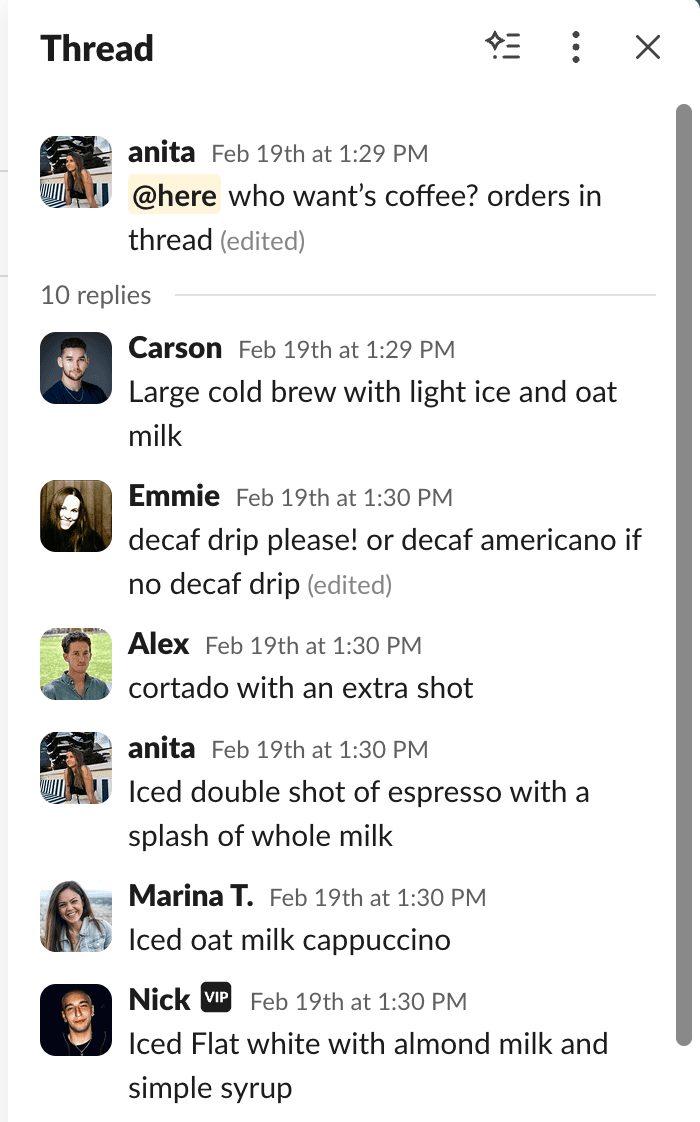
The assistant uses Slack context to read the thread and extract structured preferences from natural language. It understands that “decaf drip please, or decaf americano if no decaf drip” is not two drinks. It is one drink with a fallback. It can keep track of names, drink sizes, milk choices, ice preferences, extra shots, syrups, and edits in the thread.
With computer control, the assistant can navigate DoorDash the same way a person would: choose a nearby store, search the menu, select items, customize drinks, and build the cart. If something is unavailable, it can apply the fallback from the thread or ask the user what to do.
The important boundary is approval. The assistant can prepare the cart and summarize the total, but it waits before placing the order. That makes the workflow useful for real purchases without turning the assistant into a rogue caffeine procurement department, which would be funny exactly once.
A real example
At the office, Ava collected coffee orders from a Slack thread and handled the DoorDash run. People replied with normal human chaos: cold brew with oat milk, decaf drip with a fallback, cortado with an extra shot, iced cappuccino, flat white with syrup. Ava turned the thread into an order instead of making someone manually copy every request into a delivery app.
Why this pattern matters
This is what assistants are good at: messy coordination across people, tools, and real-world constraints. The value is not that coffee is hard. The value is that the assistant can read the social context, preserve everyone’s preferences, use a browser-based service, and pause at the exact moment where human approval matters.
The outcome
A chaotic office thread becomes a clean cart, a confirmed total, and coffee on the way. The team gets the nice little moment without making one person become the unpaid logistics coordinator for the afternoon.